
Picture this: You’re browsing an online store during your lunch break. The homepage instantly shows you products tailored to your recent searches, favorite colors, and even the weather in your city. No irrelevant suggestions, just what you’re likely to want, exactly when you want it.
That’s the power of hyper-personalization
Batch emails and demographic-based campaigns are fading fast. As digital expectations rise, customers now expect brands to speak directly to them based on how they think, shop, and live. Simple segmentation just doesn’t cut it anymore. That’s why forward-thinking businesses are ditching static dashboards for smarter, real-time interactions. With AI and real-time analytics, brands can craft experiences that are personal, timely, and truly meaningful.
Let’s explore how businesses are evolving from outdated marketing methods to precise, data-driven connections that actually click. Read on!!
Key Takeaways
- Traditional segmentation is no longer enough; customers now expect real-time, personalized interactions tailored to their unique behaviors and context.
- AI and analytics work together; AI drives personalization with smart predictions, while analytics refines strategies through continuous feedback.
- Businesses can start small with clean data, pilot projects, and the right KPIs. Companies of any size can begin delivering hyper-personalized experiences.
From Segments to Individuals: The Personalization Shift
Marketing once was all about mass messaging. Then came the audience segmentation. But now? That’s starting to feel a little outdated, too.
According to McKinsey, 71% of consumers expect brands to deliver personalized interactions, and 76% get frustrated when they don’t get them.
Hyper-personalization is a step beyond just inserting names into emails or recommending generic products. It’s about understanding where a customer is, what they’re doing, and why—and responding in real time.
Take Netflix. It doesn’t just divide users by genre. It personalizes recommendations based on what you watch, what you skip, how long you watch, and even the time of day you’re active. That’s next-level personalization in motion.
AI and Analytics: The Personalization Power Duo
AI acts as the engine that drives personalization, crunching data, identifying patterns, and adapting content. But engines need feedback, and that’s where analytics steps in, constantly evaluating and adjusting.
AI: The Personalization Engine
These systems use tools like machine learning, natural language processing, and behavioral modeling.
AI can:
- Predict what customers are likely to do next
- Recommend content or products tailored to each user
- Respond in real time to behavior shifts
Analytics: The Feedback Loop That Sharpens Strategy
Analytics isn’t just about dashboards and numbers. It’s your pulse-check on how well your personalization efforts are resonating.
It helps you:
- Understand how people interact with your brand
- Spot what’s working—and what’s not
- Optimize your strategy for better impact
Spotify’s Discover Weekly is a great example. Every time you skip, replay, or like a song, Spotify learns more about your taste. Over time, the playlist starts to feel eerily accurate because your behavior shapes it.
In short, analytics turns user actions into actionable insights powering better, sharper experiences each time.
Context Is Everything: Personalization in the Moment
Personalization isn’t just about what someone did yesterday. It’s about what they need right now.
A visitor browsing on their phone at noon on a weekday might not want to read a detailed blog but they might love a 60-second demo video.
Real-Time Personalization Examples:
- Amazon updates your homepage based on what you browsed seconds ago.
- Uber Eats tweaks its restaurant suggestions based on your past orders, time of day, and local weather.
- Airbnb filters search results depending on your trip type – solo, family, or business.
Behavioral signals like clicks, scrolls, and idle time are now the secret sauce of hyper-contextual personalization. That’s where real-time value kicks in.
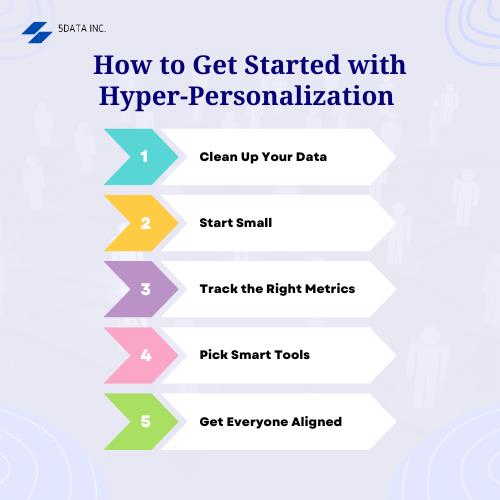
How to Get Started with Hyper-Personalization
The concept is exciting, but implementation can feel daunting. Here’s how to keep it simple and practical:
- Clean Up Your Data
- Start Small
- Track the Right Metrics
- Pick Smart Tools
- Get Everyone Aligned
Accurate, unified, privacy-compliant data is the foundation. No shortcuts here.
Don’t try to personalize everything overnight. Begin with one or two elements like a customized email campaign or homepage banner. Test, tweak, and scale.
Move beyond open rates. Monitor engagement depth, conversion lifts, churn rates, and customer lifetime value (CLV).
Use platforms that allow real-time updates, AI-driven recommendations, and easy CRM/analytics integrations.
Personalization succeeds when marketing, product, and data teams work together. Break the silos and set common goals.
The Numbers Speak Volumes
- $18.9B – Estimated global value of the hyper-personalization market in 2023
- $74.82B – Projected market size by 2033 (Source: Future Market Insights)
- Companies using advanced personalization see:
🔸 5–15% boost in revenue
🔸 10–30% better return on marketing spend (Source: BCG) - AI use in marketing has grown 2.5x in the last two years (Source: Salesforce Marketing Report, 2024)
The Future Is Personal and It’s Already Here
The era of one-size-fits-all marketing won’t work anymore. Customers not only expect personalized experiences, they demand them.
The good news? AI and analytics now make it easier than ever to deliver digital interactions that feel timely, relevant, and made just for them. And remember hyper-personalization isn’t a finish line. It’s an ongoing journey.
Start small, refine constantly, and always aim to make every interaction count. With accurate data, smart tools, and team collaboration, the payoff is real and measurable.
FAQs
1. What key challenges arise during the implementation of hyper-personalization?
Common roadblocks include fragmented data, lack of skilled talent, tech integration issues, and navigating privacy regulations.
2. How can small businesses leverage AI for personalization?
Use plug-and-play tools like AI-based email platforms, CRMs with personalization features, and smart chatbots. You don’t need a big budget to start.
3. What data is essential for effective hyper-personalization?
Behavioral data (clicks, scrolls, time spent), purchase history, device type, location, and contextual signals like time and weather all play a role.
4. How do you measure the ROI of hyper-personalization?
Track metrics such as CLV (customer lifetime value), churn reduction, conversion rates, and multi-channel engagement improvements.