

Modern healthcare management platforms that integrate advanced data analytics with AI-driven intelligence empower providers to predict, prevent, and personalize treatments in real time.
This blog explores how artificial intelligence and analytics are reshaping personalized healthcare not as a distant dream, but as a reality that’s already here, saving lives, improving patient experiences, and redefining the patient-provider relationship.
Key Takeaways
- Data analytics turns scattered patient data into predictive, proactive health insights.
- AI delivers real-time, personalized care recommendations that evolve with the patient.
- Personalized healthcare builds trust, improves outcomes, and reduces costs.
The Power of Data Analytics in Modern Healthcare
Imagine this: Maya, a 42-year-old teacher, had been struggling with recurring migraines for years. Every visit to the doctor felt the same, describe the symptoms, undergo tests, wait for results, and try yet another prescription. Nothing seemed to work.
What she didn’t realize was that the clues to her condition were already there within her medical history, daily habits, and even her genetic makeup waiting to be discovered.
In the past, patient care was often reactive, treating symptoms after they appeared. Today, data analytics flips that approach. By consolidating data from:
- Electronic Health Records (EHRs)
- Lab results
- Wearable devices
- Lifestyle and environmental factors
Analytics platforms can identify patterns that humans might overlook.
Example: Maya’s case
- Before analytics: Guesswork-based treatments with little success.
- After analytics: Identification of migraine triggers linked to diet and seasonal stress spikes, insights derived from thousands of data points in seconds.
Benefits of Healthcare Analytics
Analytics turns healthcare into a proactive, insight-driven partnership between provider and patient.
- Early disease detection through predictive models.
- Timely interventions that reduce hospital admissions.
- Lower treatment costs and improved recovery rates.
Why it works:
- Seamless integration of diverse datasets.
- A unified, 360° view of a patient’s health journey.
- Data-driven decisions replacing assumptions.
AI in Action: Real-Time, Personalized Care
If data analytics provides the map, AI acts as the guide reading complex health information in the moment and helping clinicians make precise, informed decisions. It takes raw data and turns it into practical, personalized strategies that evolve as a person’s health changes.
How technology supports personalized care:
- Transforms health analysis into treatment plans designed for each individual.
- Suggests lifestyle changes and specific treatments based on individual needs.
- Schedules preventive screenings at the right time to lower health risks.
- Updates treatment plans dynamically as new data from wearables, medical tests, and follow-up visits is received.
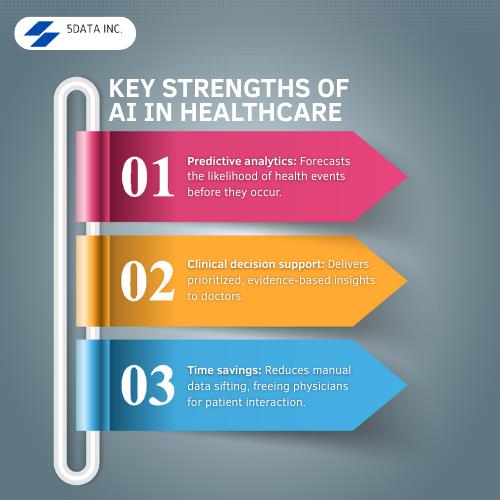
Core strengths of AI in healthcare:
- Predictive analytics: Forecasts the likelihood of health events before they occur.
- Clinical decision support: Delivers prioritized, evidence-based insights to doctors.
- Time savings: Reduces manual data sifting, freeing physicians for patient interaction.
By combining meaningful data insights with flexible decision-making, advanced healthcare tools help deliver care that is accurate, proactive, and tailored to each person’s needs.
The Human Impact: Better Outcomes, Greater Trust
Personalized healthcare is ultimately about people, not just technology. When advanced analytics and intelligent tools work together, they make care more precise, responsive, and patient-centered.
For patients:
- Feel genuinely seen, heard, and understood.
- Gain confidence in evidence-based care plans.
- Avoid unnecessary trial-and-error treatments.
For providers:
- Access a single, centralized record that streamlines administrative work.
- Make quicker, more accurate diagnoses.
- Collaborate effectively with other healthcare professionals.
The wider impact:
- Faster recovery periods.
- Lower chances of re-admission.
- A stronger foundation of trust between patients and providers.
By making healthcare smarter, more connected, and focused on each person, data analytics and intelligent tools are shaping a future where improved outcomes and lasting trust go hand in hand.
Conclusion
Personalized healthcare powered by data analytics and smart technology is already transforming our lives every day. By turning complex health information into real-time, actionable insights, it strengthens the relationship between patients and providers, improves outcomes, and helps control costs. The future of healthcare is about technology using smarter tools that understand each person’s unique health story with data-driven intelligence leading the way.
FAQs
1. How does AI improve patient outcomes in personalized care?
AI analyzes patient data to predict risks, suggest tailored treatments, and enable earlier interventions leading to faster recovery and better long-term health.
2. Is patient data safe in AI-driven systems?
Yes. Modern healthcare platforms use secure, encrypted storage and comply with strict healthcare data privacy regulations like HIPAA.
3. Can smaller clinics benefit from personalized healthcare technology?
Absolutely. AI and analytics scale to fit organizations of all sizes, helping smaller clinics offer high-quality, data-driven care without heavy infrastructure costs.