If your digital growth has slowed, the problem may not be your campaigns; it may be how your marketing team...


If your digital growth has slowed, the problem may not be your campaigns; it may be how your marketing team...

A fast-growing retail brand launched a new mobile app just before its biggest festive sale. The UI looked...

Every business today collects data, but not every business knows how to use it effectively. Reports are...
E-commerce has become more than just a buying platform. It’s an ecosystem of experiences, interactions, and innovation. As businesses expand online, multivendor marketplaces are redefining how brands sell and consumers shop. From startups to established enterprises, everyone is moving toward marketplaces that enable multiple sellers to reach wider audiences with ease and efficiency.
With online retail growth projected to exceed $8 trillion globally, businesses are focusing on agility, personalization, and transparency to stay competitive. As we look beyond 2025, the next generation of digital commerce marketplaces will rely heavily on intelligent systems, flexible architecture, and meaningful customer engagement.
Before exploring the top emerging trends, one thing is clear that the future of multivendor e-commerce belongs to businesses that adapt swiftly and earn customer trust at every stage.
Let’s explore the top e-commerce marketplace trends that are reshaping how online businesses operate and scale.
Personalization is no longer about showing similar products; it’s about understanding intent. Modern multivendor platforms are using data and automation to anticipate what customers truly want.
This shift ensures every interaction feels relevant, intuitive, and human, helping marketplaces drive repeat purchases and long-term loyalty.
As e-commerce evolves, so does its architecture. Headless and composable marketplaces are giving businesses the freedom to innovate without disruption.
Platforms like 5DataInc’s Digital Commerce Marketplace exemplify this approach empowering businesses to scale and customize without starting from scratch.
Shopping today is social, visual, and community-driven. Customers are discovering products not through search bars but through stories, reels, and live sessions.
For smaller vendors, this shift levels the playing field. Visibility is no longer dependent solely on ad budgets but on authentic engagement.
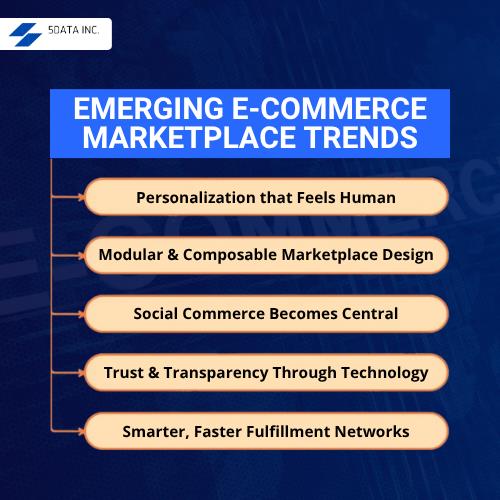
As marketplaces grow, so does the challenge of trust. Customers want to know where products come from, how sellers are rated, and whether data is safe.
This evolution ensures that both vendors and customers interact in a secure, verifiable environment, strengthening loyalty and credibility across the platform.
Speed is now the ultimate differentiator in online retail. Multivendor platforms are transforming how goods move from vendor to doorstep.
For marketplace owners, these smart fulfillment tools improve efficiency and create a consistent and dependable buyer experience.
Multivendor marketplaces are entering a new era, built on intelligence, flexibility, and trust. The trends shaping this space go far beyond technology; they focus on making commerce more connected, human, and efficient.
5DataInc’s Digital Commerce Marketplace helps businesses create thriving ecosystems where vendors succeed, customers stay engaged, and every transaction feels seamless.