Recent BlogsWhat we cover in this blog When the Pilot Works but Production Doesn't Reason 1: The Data Wasn't...


Recent BlogsWhat we cover in this blog When the Pilot Works but Production Doesn't Reason 1: The Data Wasn't...

Recent BlogsWhat we cover in this blog When the Bots All Break at Once What RPA Was Built For — and Where It...
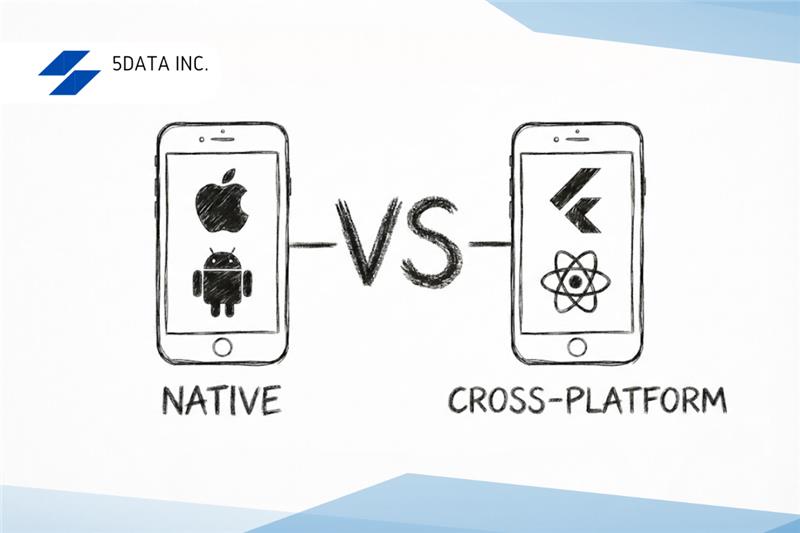
Building a mobile app in 2026 isn't just about launching on iOS and Android; it's about delivering...
Every business today collects data, but not every business knows how to use it effectively. Reports are generated, dashboards are reviewed, and metrics are tracked, yet decision-makers often rely on intuition when it matters most. The difference between data-rich and data-smart organizations lies in how analytics is applied.
Advanced data analytics goes beyond basic reporting by enabling organizations to understand patterns, anticipate outcomes, and recommend optimal actions. This approach is based on four essential pillars of advanced data analytics: Descriptive, Diagnostic, Predictive, and Prescriptive analytics, all of which contribute to making better decisions.
Together, these pillars create a structured decision-making journey moving from understanding past performance to shaping future outcomes. With AI-driven tools, real-time data streams, and growing competitive pressure, organizations that leverage all four pillars are better positioned to act faster, reduce risk, and uncover new growth opportunities.
This blog breaks down each pillar in a clear, practical way, showing how advanced analytics truly support smarter business decisions.
Descriptive analytics is the starting point of advanced data analytics. Its purpose is simple but essential: to summarize historical data and explain what has already occurred. It focuses on organizing raw data into meaningful formats such as reports, dashboards, scorecards, and visualizations.
Common examples include:
Descriptive analytics answers questions like:
Why it matters:
Without descriptive analytics, organizations lack visibility. It provides a shared understanding of performance and establishes a reliable foundation for deeper analysis. However, while it explains what happened, it does not explain why.
Once you understand what happened, the next step is to uncover why it happened. This is the role of diagnostic analytics. It examines data more deeply to identify root causes, relationships, and contributing factors behind outcomes.
Typical techniques include:
Examples of diagnostic questions:
Why it matters:
Diagnostic analytics transforms data into insight. Instead of reacting to outcomes, organizations can learn from them, avoid repeating mistakes, and refine strategies based on insights rather than assumptions.
Predictive analytics moves analytics from hindsight to foresight. It uses historical data, statistical methods, and machine learning techniques to forecast future outcomes.
Predictive analytics answers questions such as:
Common use cases include:
Predictive analytics increasingly relies on AI models that learn from new data, improving the accuracy and adaptability of forecasts.
Why it matters:
Predictive analytics enables proactive decision-making. Instead of responding after an event occurs, organizations can prepare in advance, reducing uncertainty and improving strategic planning.
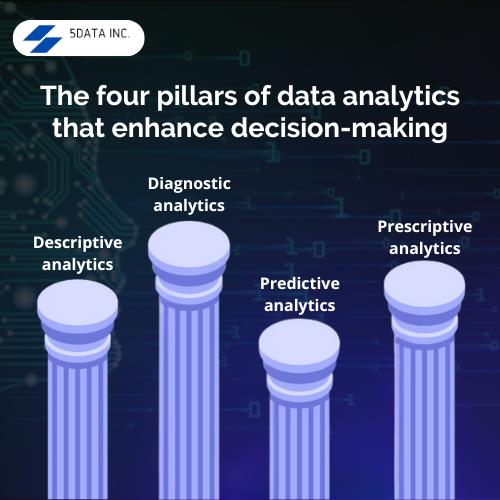
Prescriptive analytics is the most advanced and impactful pillar. It goes beyond prediction to recommend specific actions that lead to the best possible outcomes. By combining predictive models, business rules, optimization techniques, and AI, prescriptive analytics answers the most valuable question: “What should we do next?”
Examples include:
Why it matters:
Prescriptive analytics directly connects data insights to decision-making, helping organizationss choose the best option among multiple scenarios, balancing risk, cost, and performance.
The real power of advanced data analytics comes from using all four pillars together, not in isolation:
When combined, these pillars create a continuous, data-driven decision loop that improves speed, accuracy, and confidence across the organization.
The four pillars of advanced data analytics provide a clear framework for transforming data into meaningful actions, enabling better decision-making. In a rapidly changing, data-intensive world, organizations that excel across all four pillars gain a critical advantage in clarity, confidence, and control over their decisions.
As analytics continues to evolve in 2025 and beyond, success will depend not only on collecting data but also on strategically applying advanced analytics throughout the organization. At 5DataInc, we assist organizations in designing and implementing comprehensive advanced data analytics solutions, ranging from descriptive reporting to AI-driven prescriptive decision systems.
Connect with us today to turn your data into smarter, faster, and more impactful decisions.